)
)
Global
Systems
Laboratory

Forecast systems that deliver solutions
Explore GSL
Who we are
In a world where technology and Earth system science are advancing rapidly, the Global Systems Laboratory (GSL) stands at the forefront of atmospheric research. The core of GSL's culture is a dynamic and forward-thinking spirit that drives our investment in people, partnerships, and organizational performance. GSL is a space where innovation and science converge in a hybrid and collaborative environment.
GSL is one of ten NOAA Research Laboratories and is located in Boulder, Colorado. Our research improves environmental prediction models, develops state-of-the-science decision support tools, visualization systems, and uses high-performance computing technology and artificial intelligence research to support a Weather-Ready, Fire-Ready Nation.
Our Research Serves The Nation
The research we do improves weather data, forecasts, and computing techniques used by industry, decision-makers, and stakeholders. Our work makes the nation's operations safer and more efficient, helps protect lives and property, and promotes economic prosperity.
Public Safety
Aviation
Energy
Fire Weather
News from GSL

Satellite-derived global aerosol distribution, September 17, 2017. Image credit: NOAA/NESDIS Aerosols, or tiny particles released to the atmosphere through various natural and human activities, play a key role toward understanding the Earth system. Every day, they impact air quality and human health, while also influencing our weather by affecting clouds...

The American Geophysical Union (AGU)’s Annual Meeting brings together the world’s leading Earth and space scientists. Several GSL scientists presented talks and posters at the 2025 Annual Meeting (“AGU25”) at the New Orleans Convention Center from December 15 to 19, 2025. This year, the GSL team delivered 16 oral...

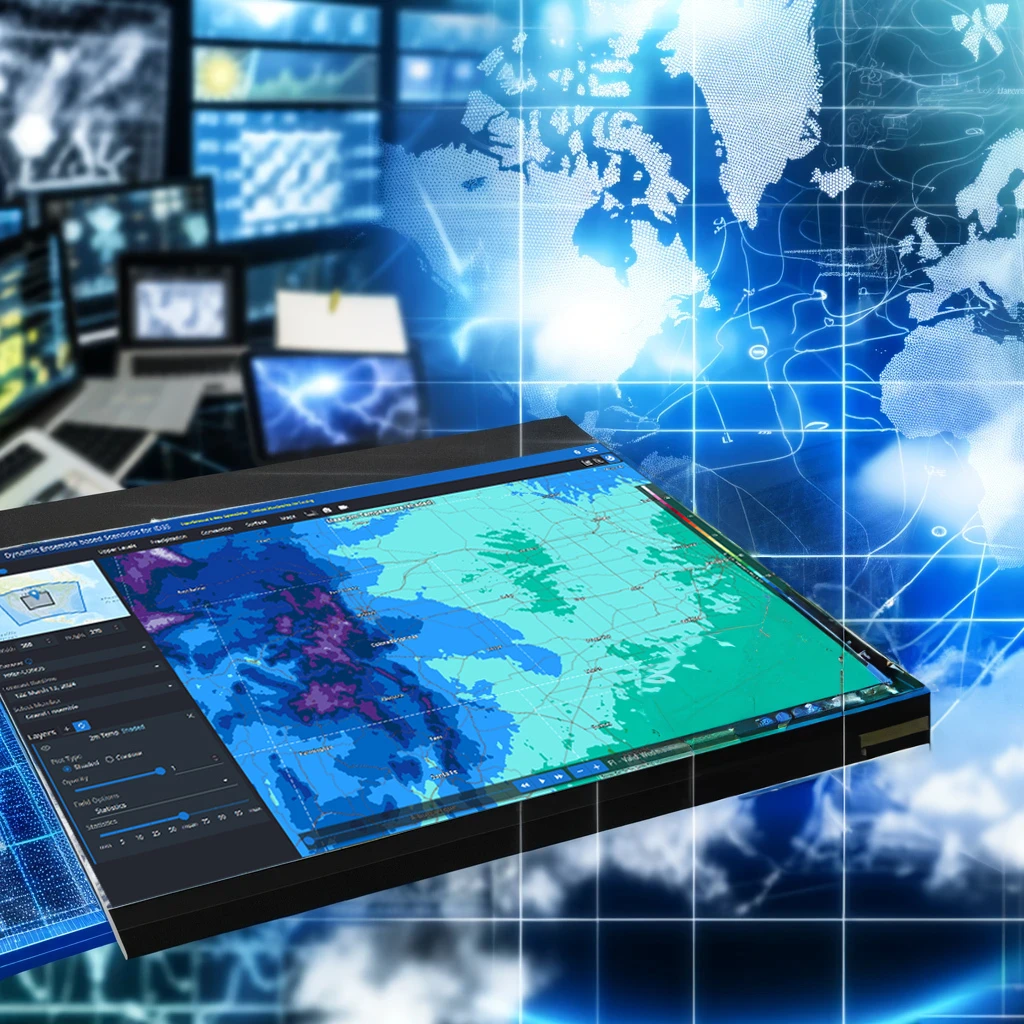
GSL’s latest release of the powerful Dynamic Ensemble Scenarios for Impact-based decision support (DESI) is now live on both the GSL experimental product development server and the National Weather Service (NWS) cloud platform. Version 3.5, released September 2025, brings several new features and datasets to support research and operations across...
DESI Digest: Turning Forecasts into Visual Insight
DESI Digest showcases powerful visualizations from NOAA's Dynamic Ensemble-based Scenarios for IDSS (DESI) project. These quick, impactful videos turn complex forecasts into clear insights that support emergency managers, forecasters, and the public.
Check back often for fresh, scenario-driven updates on the nation's evolving weather.
On December 17, 2025, the Colorado Foothills and Front Range area experienced a severe downslope wind storm, with peak wind gusts of 60-90 MPH. Depicted here are the 10-m wind speeds and directions from the 11a MST (or 1800 UTC) forecast cycle of one of GSL's Model for Prediction Across Scales (MPAS) forecasts. This forecast, called MPAS_RRFSA, uses the first version of NOAA's Rapid Refresh Forecast System to provide information about the initial state of the atmosphere to start its forecast. These forecasts, which were just added to DESI on December 16, 2025, are developmental toward potential future versions of the Rapid Refresh Forecast System and should not be used to inform decisions related to life or property.
Our Goals


Our Mission
Lead research and directed development through the transition of environmental data, models, products, tools, and services to support commerce, protect life and property, and promote a scientifically literate public.
Research Areas
Organizational Excellence, Earth System Prediction, Advanced Technologies, and Decision Support are the foundation to achieving the GSL Grand Challenge: Deliver actionable global storm-scale prediction and environmental information through advanced technologies to serve society.
Global Systems Laboratory